
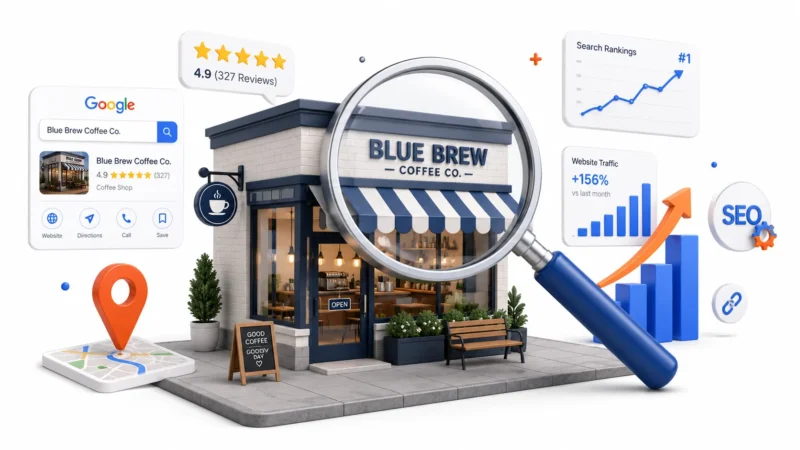
What is a local SEO audit checklist? A local SEO audit checklist is a structured guide used to evaluate a business’s online presence to ensure it is optimized for local search queries. It focuses on Google Business Profile, on-page optimization, citations, and reviews to help small businesses rank higher in the “Local Pack” and attract more foot traffic.
Running a small business is hard enough without worrying about complex algorithms. You know your service is the best in town, but if you aren’t appearing on the first page of Google, you’re essentially invisible to new customers.
That is where a local SEO audit comes in. Think of it as a health check-up for your digital storefront. Instead of guessing why your competitors are getting more calls, an audit gives you a data-driven roadmap to fix what’s broken.
In this guide, we will walk you through a comprehensive local SEO audit checklist designed specifically for small business owners. No expensive agency fees, no confusing jargon—just actionable steps to get you noticed.
Why Your Small Business Needs a Regular Local SEO Audit
Local search is fundamentally different from general search. When someone searches for “plumber near me” or “best bakery in [City],” Google doesn’t just look for the most authoritative website in the world. It looks for the most relevant and trustworthy business in that specific geographic area.
Search engines constantly update their algorithms. What worked in 2023 might be hindering you today. A quarterly audit ensures that your information is accurate, your keywords are current, and your technical foundation is solid.
By following this checklist, you will identify “low-hanging fruit”—small changes that lead to big jumps in rankings. For instance, simply updating your business hours or responding to a few old reviews can signal to Google that your business is active and reliable.
Phase 1: The Foundation—Google Business Profile (GBP) Audit
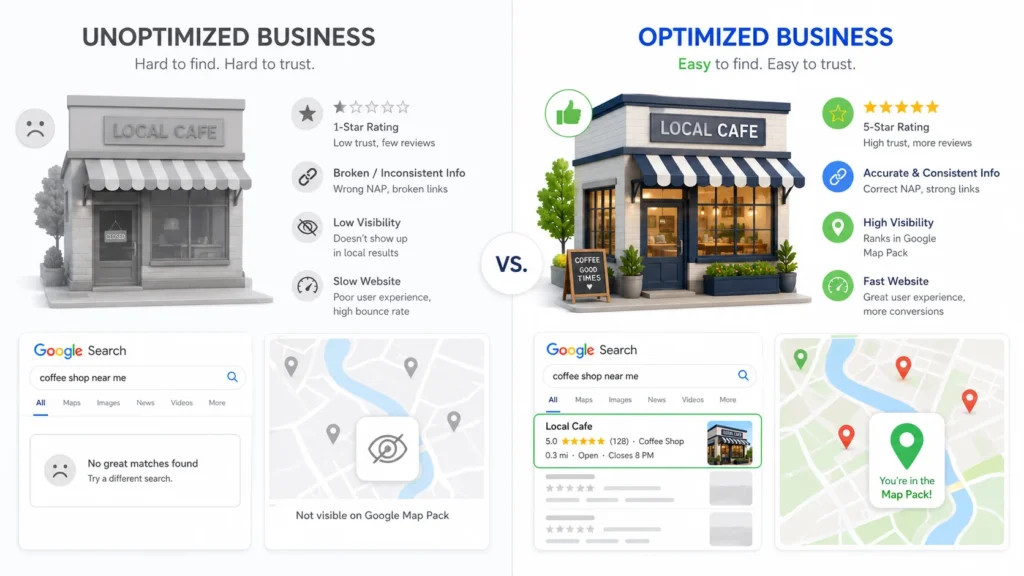
Your Google Business Profile is the single most important asset for local visibility. It is the primary driver for the “Map Pack” (the top three local results on Google).
Is Your Profile Fully Claimed and Verified?
You cannot optimize what you do not own. If you haven’t claimed your business, someone else might. Ensure you have completed the verification process via postcard, phone, or email.
Accuracy of NAP Data
NAP stands for Name, Address, and Phone number. This is the bedrock of local SEO. If your name is “Joe’s Pizza” on your website but “Joe’s Pizzeria & Pasta” on Google, search engines get confused. Consistency creates trust.
Category Optimization
Many business owners pick the first category that looks “close enough.” This is a mistake. Your primary category should be the most specific description of your business.
Example: If you run a specialized Italian restaurant, don’t just use “Restaurant.” Use “Italian Restaurant.”
Review Management and Velocity
Reviews aren’t just for customers; they are ranking signals. Google looks at your average star rating, the number of reviews, and how frequently you receive new ones (velocity).
Pro Tip: Don’t just collect reviews—respond to them. Replying to a negative review professionally can often save a customer and show Google you are an active business owner.
Quick Win: If you are struggling to get new reviews, you need an easy way for customers to leave them. Use a Review Link Generator to create a direct link that takes customers straight to your review page.
🚀 STOP GUESSING, START GROWING!
Are you wondering where you actually stand in the local search results? Don’t leave your visibility to chance. Use our free tools to get instant clarity:
- Check your current rankings: Rank Checker
- Get a comprehensive health report: Free Local SEO Audit
Phase 2: On-Page Local SEO Audit
Your website is your digital headquarters. While GBP gets you in the Map Pack, your website helps you rank in the organic results below the maps.
Localized Keyword Integration
You shouldn’t just target “Lawyer.” You need to target “Family Lawyer in [City, State].”
Where to place these keywords:
- The H1 Tag: Your main page heading.
- The First Paragraph: As mentioned, put your focus keyword in the first 10% of the content.
- Meta Descriptions: Encourage clicks by mentioning your location.
- Image Alt Text: Describe images using local terms (e.g., “Our dental clinic in downtown Miami”).
Location Pages for Multiple Offices
If you have three locations, do not put them all on one “Contact” page. Create a dedicated landing page for each city. Each page should have a unique description, a local map embed, and specific testimonials from customers in that area.
Mobile-First Responsiveness
Most local searches happen on the go. If a customer clicks your link and the website takes 10 seconds to load or requires zooming in to read the menu, they will bounce back to Google and click your competitor.
Check your site speed using tools like Google PageSpeed Insights.
Local Schema Markup
Schema is a piece of code that tells search engines exactly what your business is. Instead of Google “guessing” your phone number, Schema tells them: “This is the official business phone number.”
Use Schema.org to implement “LocalBusiness” markup. This increases your chances of getting “rich snippets” (like star ratings) in the search results.
Phase 3: Off-Page Local SEO and Citations
Off-page SEO is about your reputation across the rest of the internet. In the local world, this primarily means “Citations.”
What are Local Citations?
A citation is any mention of your business’s NAP (Name, Address, Phone) on another website. Common sources include Yelp, Yellow Pages, Facebook, and industry-specific directories (like TripAdvisor for hotels).
The Citation Audit Process
You need to find every mention of your business online and ensure the information is identical.
The Danger of Duplicate Listings: If you have two listings for the same business on the same directory, Google may penalize you or “merge” them, often losing your best reviews in the process.
Industry-Specific Directories
General directories are great, but niche directories are powerful. If you are a contractor, being listed on Angi or HomeAdvisor carries more weight than a random business directory.
Backlink Strategy for Local Businesses
You don’t need thousands of links from global websites. You need a few high-quality links from local sources.
- Sponsor a local little league team.
- Get featured in the local chamber of commerce directory.
- Collaborate with a complementary local business for a guest blog post.
Phase 4: User Experience (UX) and Conversion Audit
Ranking is useless if nobody calls you. Your audit must include a conversion check.
The “3-Second” Rule
When a user lands on your site, can they tell within 3 seconds:
- What you do?
- Where you are located?
- How to contact you?
Clear Calls to Action (CTAs)
Avoid vague buttons like “Submit.” Use action-oriented phrases:
- “Get a Free Quote Now”
- “Book Your Appointment”
- “Call [Phone Number] Today”
Trust Signals
Include badges, certifications, and a gallery of your actual work. Stock photos are a trust-killer for local businesses. People want to see your real office and your real team.
Local SEO Audit Comparison: DIY vs. Professional
Export
| Feature | DIY Audit (Using this Guide) | Professional Agency Audit |
| Cost | Free / Low Cost | High Monthly Retainer |
| Time Required | 5–10 Hours | Hands-off for Business Owner |
| Depth | Basic to Intermediate | Deep Technical Analysis |
| Implementation | Manual | Managed |
| Tooling | Free tools (localaized.com) | Enterprise Paid Software |
Local SEO FAQ
How often should I perform a local SEO audit? For most small businesses, a comprehensive audit every three months (quarterly) is ideal. This allows you to adjust for seasonal trends and fix any new citation errors.
Does my business need a website if I have a Google Business Profile? Yes. While GBP is powerful, you don’t own it—Google does. A website gives you full control over your branding, lead capture, and detailed information.
What is the most important factor for ranking in the Map Pack? While many factors exist, the combination of GBP optimization, proximity to the searcher, and the quality/quantity of reviews are the strongest drivers.
How long does it take to see results after an audit? Local SEO is not overnight. Depending on your competition, you can expect to see movement in rankings within 30 to 90 days after implementing your audit fixes.
Final Checklist Summary
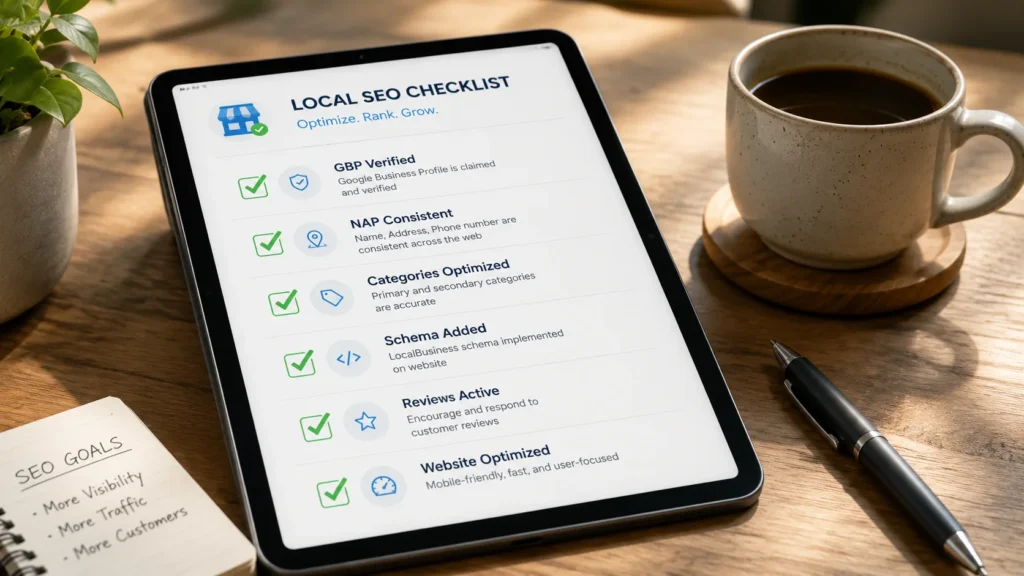
To make this easy, here is your condensed action list:
- Claim and verify Google Business Profile.
- Standardize NAP across all platforms.
- Optimize GBP categories and photos.
- Generate a review link and send it to recent customers.
- Audit on-page keywords (Include city/state).
- Verify mobile site speed and usability.
- Implement LocalBusiness Schema markup.
- Clean up duplicate citations in directories.
- Secure 2-3 local backlinks (Chamber of Commerce, etc.).
- Test your CTA buttons and contact forms.
🏁 READY TO DOMINATE YOUR LOCAL MARKET?
Don’t let your competitors steal your customers. The first step to ranking higher is knowing exactly where you’re failing. Start your journey to the top of Google today with our free suite of tools.
👉 Get Your Comprehensive Report: Free Local SEO Audit 👉 Check Your Local Rankings: Rank Checker 👉 Start Getting More Reviews: Review Link Generator
Written by
Bryan Eric Tidalgo
5-year Local SEO Specialist helping US small businesses rank on Google Maps. Founder of LocalAIzed.com