
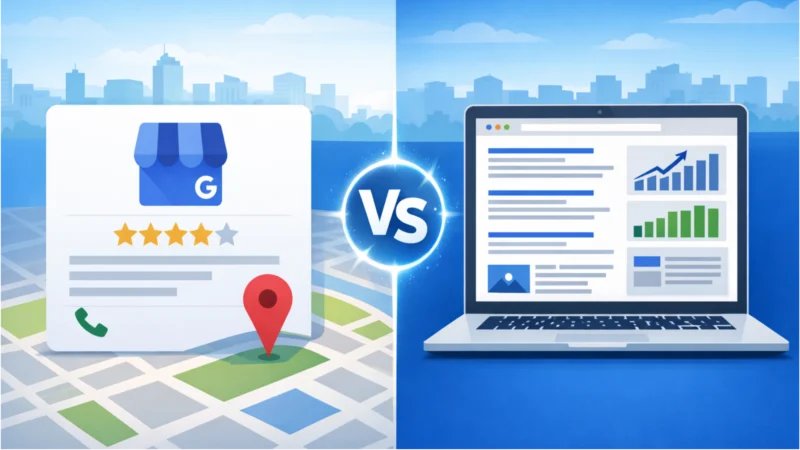
If you run a local business and you’ve been trying to figure out where to focus your SEO efforts, the GMB vs website SEO debate has probably crossed your mind. Should you prioritize your Google Business Profile (GBP/GMB) or your website?
It’s a fair question — and the answer matters. Spending time and resources on the wrong channel can mean slower growth, fewer leads, and missed opportunities. This guide breaks down what each one does, where each one wins, and why the most effective local businesses don’t choose between them.
What Is Google Business Profile (GMB) SEO?
Google Business Profile — formerly known as Google My Business (GMB) — is the listing that appears when someone searches for your business or a service you offer near them. It’s the card that shows up in Google Maps and in the local “3-pack” of results that appears above the organic search results.
When someone searches “plumber near me” or “best coffee shop in [city],” Google uses your GBP listing to decide whether to show your business — and where to rank it. According to Google’s own documentation, local results are primarily based on three factors: relevance, distance, and prominence.
Key factors that influence your GMB ranking include:
- Relevance — Does your category and description match what the user is searching for?
- Distance — How close is your business to the searcher’s location?
- Prominence — How well-known and trusted is your business based on reviews, citations, and activity?
Optimizing your GMB means keeping your Name, Address, and Phone number (NAP) consistent, gathering reviews, posting updates, adding photos, and ensuring your categories and services are accurate. If you’d rather have this handled end-to-end, Localaized’s Google Business Profile management service covers every one of these optimization points.
What Is Website SEO for Local Businesses?
Website SEO refers to everything you do to help your business’s website rank in the organic (non-map) search results. For local businesses, this usually involves a combination of:
- On-page SEO — Optimizing page titles, headers, and content with location-specific keywords (e.g., “emergency electrician in [city]”)
- Local landing pages — Creating dedicated pages for each service area or location you serve
- Technical SEO — Ensuring your site loads fast, is mobile-friendly, and is easy for Google to crawl
- Backlinks — Earning links from other local websites, directories, and press mentions
- Content marketing — Publishing helpful articles and guides that answer questions your potential customers are searching for
Website SEO takes longer to show results than GMB, but it builds lasting authority and can bring in traffic for a wide range of keywords — not just location-based ones. BrightLocal’s 2026 Local Search Ranking Factors research confirms that on-page signals remain the single most important group for both local organic and AI search visibility.
How GMB and Website SEO Differ
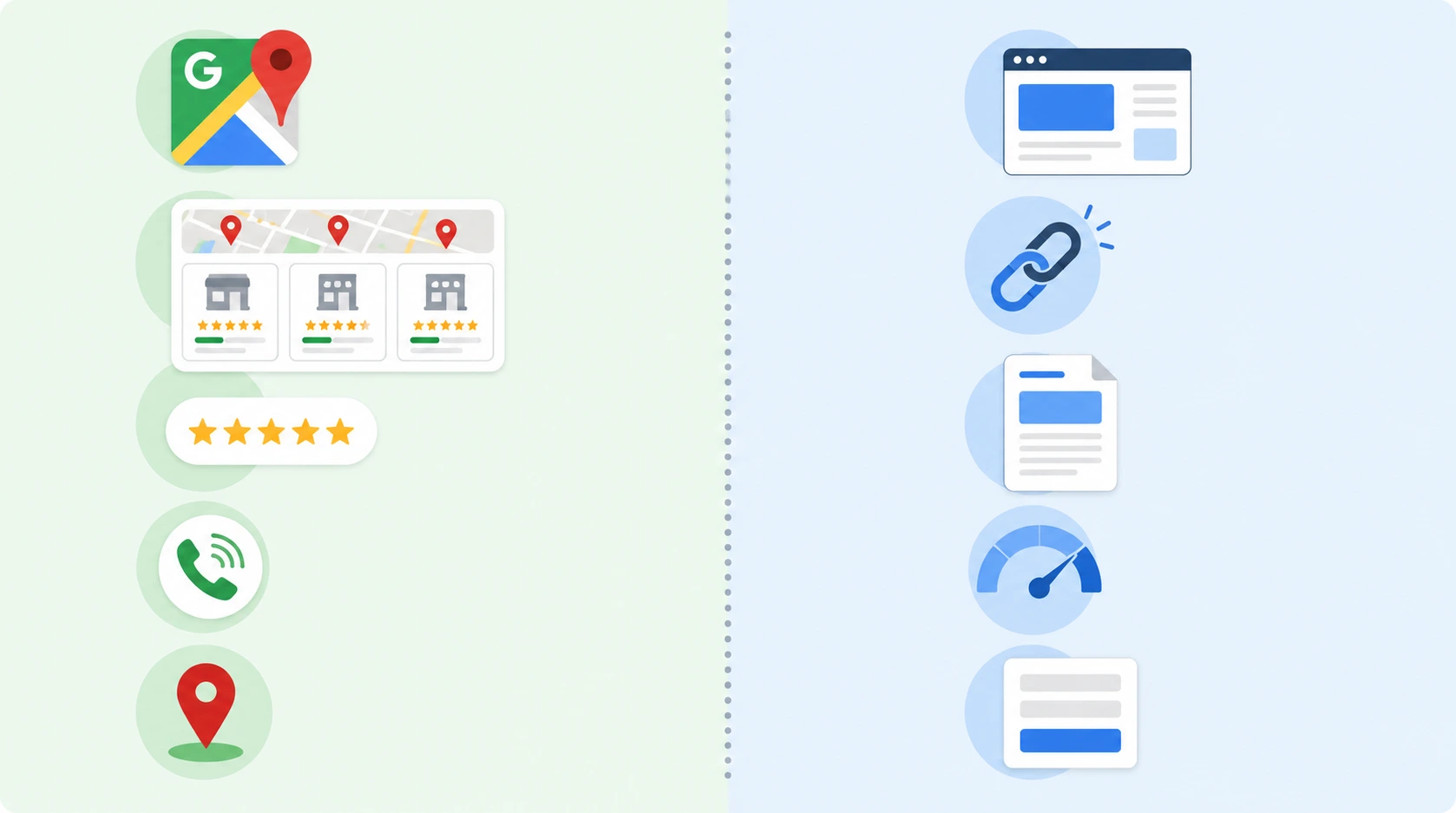
| Factor | Google Business Profile | Website SEO |
|---|---|---|
| Where it shows up | Google Maps & Local 3-Pack | Organic search results |
| Speed of results | Faster (weeks to months) | Slower (months to a year+) |
| Best for | “Near me” searches, calls, directions | Research-based queries, conversions |
| Main ranking signals | Reviews, NAP, proximity, activity | Content, backlinks, technical health |
| Traffic type | High-intent, local | Broad to highly targeted |
| Long-term value | Moderate | High |
Where Each One Wins
GMB is stronger when:
- Someone is ready to act right now — they want to call, get directions, or visit in person
- Your business serves a specific geographic area and most customers find you on Google Maps
- You want to show up for competitive “near me” searches quickly
- You rely on reviews and trust signals to convert customers
Website SEO is stronger when:
- Customers research before they decide (think: lawyers, dentists, contractors, agencies)
- You want to rank for multiple services or locations beyond what GMB covers
- You want to capture leads through forms, bookings, or email sign-ups
- You’re building long-term organic traffic that doesn’t depend on a single platform
Why You Shouldn’t Choose One Over the Other
Here’s a reality that many local business owners don’t realize: GMB and website SEO feed each other.
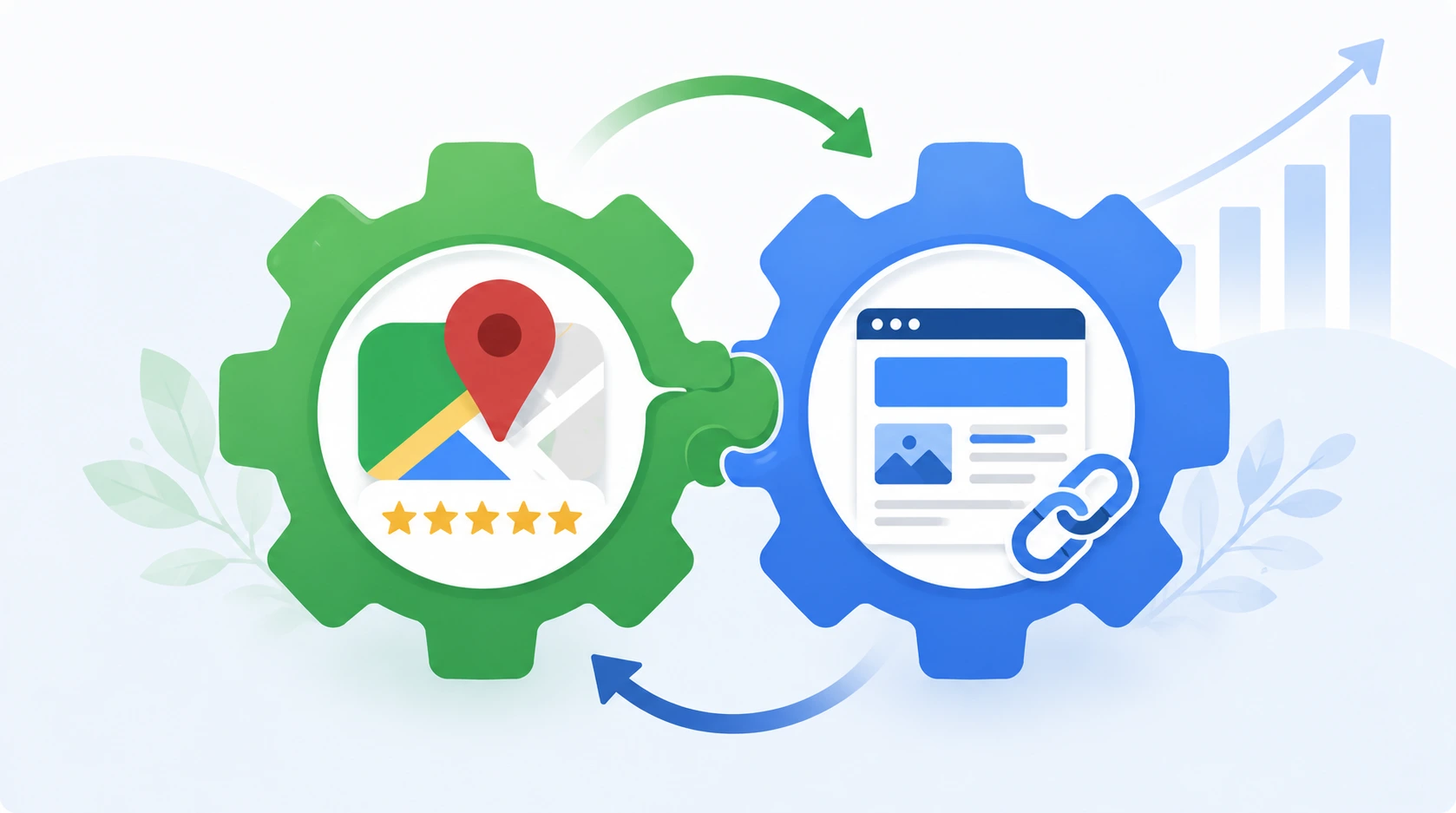
Google looks at your website when evaluating your Business Profile. A well-optimized website with consistent local signals strengthens your GMB ranking. At the same time, a strong GMB with positive reviews and high engagement tells Google your business is trusted — which can help your website rank better in organic results too.
Businesses that only focus on GMB hit a ceiling. They rank in Maps but miss out on the organic results where a large portion of clicks still happen. Businesses that only focus on their website lose out on the high-intent traffic that comes from Google Maps — especially on mobile, where Maps results dominate the screen.
The strongest local SEO strategies treat both as interconnected, not competing.
A combined approach includes:
- A fully optimized and active Google Business Profile
- NAP consistency across your website, GBP, and all online directories
- Location-specific pages on your website that reinforce your service areas
- Regular review generation and responses on GMB
- On-page SEO that aligns with the keywords you’re targeting on GBP
Not sure if your GBP and website are pulling in the same direction? A free local SEO audit can show you exactly where the gaps are.
How to Know Where You Currently Stand
Before deciding where to invest more time and effort, it helps to know where you actually rank in Google Maps right now. Most business owners assume they’re showing up for their target keywords and locations — but local rankings vary significantly depending on where the searcher is standing.
A rank check gives you a clear picture of your current visibility across different parts of your city or service area, and shows you which competitors are outranking you and where.
→ Check Your Google Maps Ranking for Free
See exactly where you rank, discover who’s beating you, and get actionable steps to improve — at no cost.
Final Takeaway
GMB and website SEO are not rivals. They are two parts of the same local SEO system. Google Business Profile gets you in front of customers who are ready to act. Website SEO reaches customers who are still deciding — and keeps your business visible long after a trend or algorithm shift passes.
For local businesses serious about growth, the question isn’t which one — it’s how well are you doing both?
Start by understanding where you stand today, then build from there.
Written by
Bryan Eric Tidalgo
5-year Local SEO Specialist helping US small businesses rank on Google Maps. Founder of LocalAIzed.com